
600k Year: A Conclusion, More or Less

Warning: word-count neepery associated with the 600k challenge follows. You can skip today’s post if that’s not your thing.

Right.

So yesterday, at Write Club, I did this
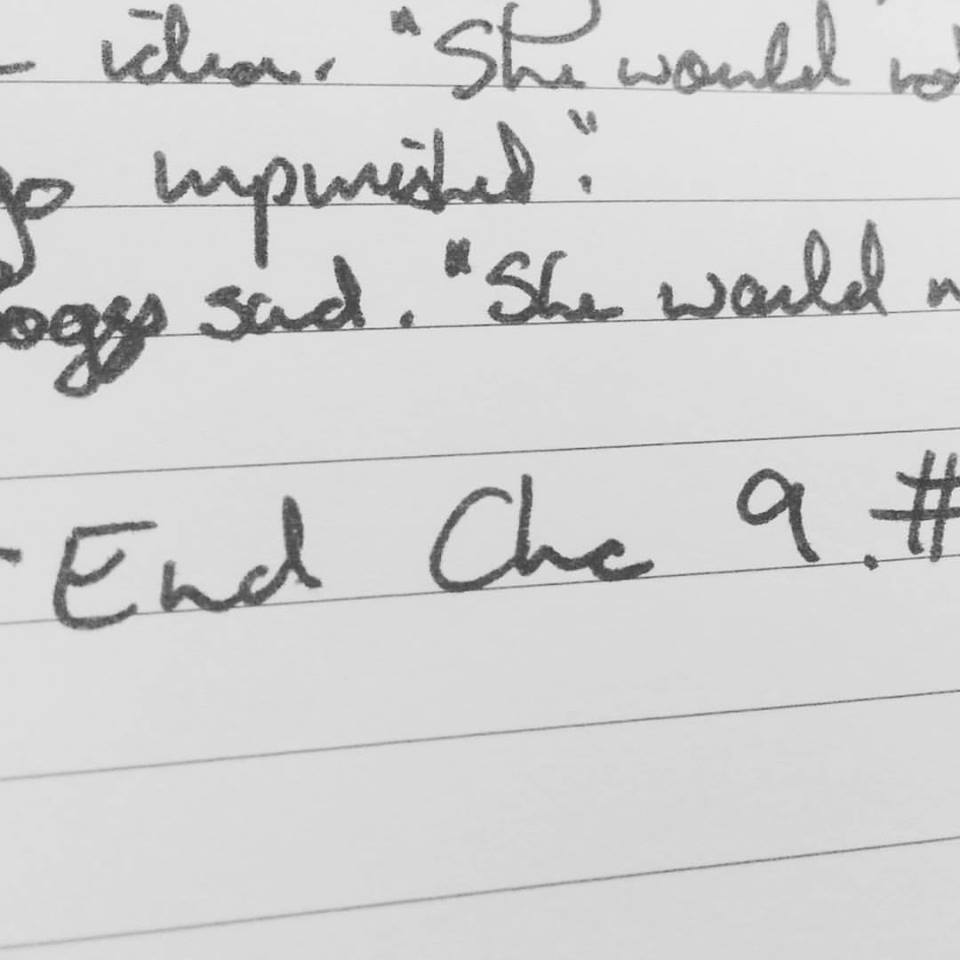
End Chapter Nine

Which means I’ve now written nine of the ten chapters I had planned for the novel I’m working on and there’s just one more to go. Probably about 65,000 to 72,000 words, depending on how accurate my words-per-page assumptions are, with another eight to ten thousand words left to chase down before I hit the end.

It…may not be done by GenreCon.

Which hurts to admit, since I was confident I’d get able to do so until about Monday, but we’re starting to hit the point where the conference stops having things that need to be done and starts to have minor disasters that will eat hours of your time as you fix them. Since I’m the only person whose disappointed if this book doesn’t get done in time, and there’s about 180 writers counting on me to get GenreCon right at present, it’s becomes one of those needs of the many situations.

SOME STATS ON MY FAILURES

Since my deadline for the 600k year dare coincides with the GenreCon banquet, I think it’s safe to say I’m not going to make it. I can accurately track 285,559 words that were done on computer between November 1, 2014, and August 17, 2015. After that we’re in the land of rough estimates, ’cause I switched over to the notebooks, I’ve filled 528 notebook pages – approximately 90,000 words.

Realistically, I’ve got maybe six to eight thousand words left in me before GenreCon makes writing pages at a time impossible.

That’ll leave me about 220,000 words off the 600k mark, but does actually put me about 120,000 words over what the inimitable Alan Baxter figured was sustainable in our discussions last year.

Which means, fair is fair, he gets to mock me when he sees me at GenreCon next week.

SOME STATS ON MY SUCCESSES (FOR CERTAIN DEFINITIONS OF SUCCESS)

On the other hand, this year’s given me an almost-finished novel draft, a completed novella draft,  two novelettes that are scheduled to be published, one paid work-for-hire gig, and about 30,000 words of finished short fiction drafts. The great curse of chasing the 600k year is that it doesn’t leave a lot of time to rewrite.

That’s the good news. The 600k challenge has also give me: 42 unfinished story drafts; five unfinished novella drafts; and five novel drafts that have between 8,000 and 37,000 words written but aren’t yet finished.

I’ve had a couple of conversations on Facebook about how the sleep apnea may have impacted on things – I’d say you’re looking at the answer right there. Almost everything that got finished in the last twelve months, with two exceptions, has been since I started CPAP back in May.

And, I should note, we’ve only started to get the CPAP therapy right (meaning: I sleep longer than five hours a night, on average) in the last three weeks. I may have failed hard at this challenge, but holy fuck, I am looking forward to seeing what I can do on the writing front in 2016. It won’t be anywhere near 600,000 words of writing, but I got a lot of things to start finishing and sending out.

WHAT I’VE LEARNED

I may have failed, but I still disagree with Alan – 600k a year isn’t an unsustainable pace for a writer. The interesting thing about tracking my word count as closely as I have for the last twelve months is the patterns is shows up.

For instance, it will probably surprise no-one that my most productive days – literally three times higher than most others – are Write Club days I spend with either Angela Slatter or Meg Vann. These days are so damn productive that if you gave me an extra write club every week, I could probably sustain a 400k year pretty consistently.

What is surprising – and potentially counter-intuitive to the way people think about writing – is that weekends are a dead spot. While I’d occasionally get it together and bust out a big word count over the Saturday/Sunday stretch, it’s generally the day when the lack of routine destroys all the habits I’ve built up around getting some words down, and I’m more likely to flake out playing computer games or doing stuff. All my triggers for writing, it seems, are built into going to or getting home from work or write club.

I did figure out a way to hack this particular problem – I can trigger a good writing day over the weekends by leaving the house and getting a coffee at my local cafe, a new habit that freed me from my regular distractions and frequently let me get two pages down while I waited for my flat white. Those two pages made the rest of the day easier to focus on, but it quickly fell apart when I didn’t have the discretionary cash to devote to it.

The second thing my stats have taught me: do not load the CIVILIZATION computer game. Ever. In fact, uninstal it. It’s traditionally been the game I’ll play when I’m stressed or freaking out, and it’s not something I booted up often, but every time I started a game in the last twelve months it would correspond with a minimum of three days where I didn’t achieve a damn thing.

The third thing: getting the apnea treated slowed me down. The quality of the work is probably better, and my focus definitely is, but in terms of raw writing time it hurt me. Yes, the apnea meant I’d doze off at the keyboard, but I’d also wake up a few minutes later – and the only upside of apnea is that there’s no considerable difference between eight hours of sleep and five when it comes to how you feel the following day. I’ve had to be a lot more disciplined about guarding writing time now, since I can’t just slog through the night to make up for a few wasted hours.

NEXT YEAR

For a while, I toyed with the idea of doing the challenge again in 2016 and taking a crack at it while actually awake. In the end, I decided against it – the trick with writing is to take the jobs, challenges, and opportunities that best suit your needs at the time.

Part of the appeal of the 600k challenge twelve months ago was that it would force me to address the issues I was having with actually sitting down and writing regularly. It’s done it’s job, in that respect: my routines are in place, I’m getting stuff done. What I’m not doing is finishing stuff, or getting new work published, which becomes the next challenge. Word-count alone is actually a terrible thing to focus on as a writer, to the exclusion of all other things, once you get past a certain point.

Instead, I’m going to take two months off – so to speak – and set some very specific project goals for 2016, putting less focus on getting words on the page, and more focus on actually doing something useful with them.

Sneaky Writer Tricks: Estrangement and Disruption

So two lads with cellos do a pretty kick-ass cover of Guns’n’Roses Welcome to the Jungle in this youtube clip. As a fan of string instruments and the Gunners, I encourage you to check it out before we move on, ’cause it’s going to be relevant:

Let me be completely honest here: this kind of thing rocks my world, and it kind of demonstrates one of the sneaky writer tricks I often mention to people in writing workshops: try to find a way to make the familiar strange.

Everyone has their own definition of what makes great art, but mine has a lot in common with a Russian theorist named Victor Shklovsky who basically said that the role of art was estrangement – taking something familiar and making it alien so that the viewer is forced to re-examine it in a conscious way.

Shklovsky essentially argues against the automatism of perception – the process where something has become so familiar that we no longer after actually think about it – and uses art as a disruptive force against it (if you’re interested, I wrote a longer post about this back in 2009, and you can find Shklovsky’s original essay reprinted online in a whole bunch of places).

A good cover version of a song is essentially the modern manifestation of this theory – they take a song that’s become so familiar that it blends into the background, then make you revisit it and re-examine it. It’s one of the reasons my all-time favourite song is The Paradise Motel’s cover of The Cars Drive, which takes one of the most twee three minute pop-songs you’ve ever heard and lays out the heartache and longing at its core by using muted vocals and slow, sweeping string movements.

It’s rare that I actually sit down and think about this in a conscious way while drafting, but it has happened. Mostly it’s a useful tool for figuring out when something is generating the necessary…well, for lack of a better word, let’s call it juice. If you can get people caught up in a familiar trope or activity, getting them focused on engaging with the familiar, you can generate more interest in what’s going on when the familiar elements are disrupted in some way.

On a macro level, a disruption of whole-scale expectations that forces an interesting re-examination of can power a whole story if you get it right (see Horn). On a micro level, taking the familiar and making it alien can give momentum to a scene where the action is otherwise small-scale and seemingly unimportant (see the opening paragraph of The Birdcage Heart).

It’s also a pretty kick-ass writing exercise, if you’re finding yourself stuck and unable to get into a scene – look for the ritual or unthinking behaviour. Getting dressed, cooking dinner, sitting down to watch a movie after a hard days work. Hand writing. Driving the car. It doesn’t really matter. Just sit down and start describing the things a character does without being conscious of it.

Sooner or later, you’ll find a moment where something goes wrong and disrupts the activity, and that’s where things start to get interesting…

Three Things Writers Can Learn About Villains from Daredevil’s Wilson Fisk

It’s been a long time since I watched a TV show at the same time it entered into the cultural Zeitgeist, but the combination of Netflix coming to Australia and the recent release of Daredevil, Season 1, means that I’ve inhaled thirteen episodes of comic-book awesomeness at the same time as everyone else is watching it.

For those who are wondering: Daredevil is good. Very good. Very dark, at times, but Daredevil was always the character to do that with. For all that Batman has a reputation for being grimdark these days, largely courtesy of the Nolan films, Daredevil is the original hard-luck film-noir superhero. Nothing good happens to him in the comics. Like, seriously, nothing. You need both hands just to count the dead girlfriends, you know? Or the times he’s been driven crazy and started to think of himself as an actual devil. Or the times he’s actually been possessed and turned into a devil.

Well, you get the picture.

Good as the series is – and it’s very good – my favourite part has been Vincent D’Onofrio’s performance as the antagonist, Wilson Fisk. D’Onofrio’s one of those actors who is excellent with the right director and script, and Daredevil gives him both. He’s over-the-top violent and crazy, but highly empathetic, to the point where even though Daredevil is basically rehashing the same grand master-villain plot as Arrow’s first season, Daredevil’s comes off feeling fresh.

What makes Fisk such an effective bad guy? Let’s take a look.

ONE: NO-ONE IS VILLAINOUS 24-7

The first four episodes spend a lot of time setting up Wilson Fisk as the big-bad of the series, through many of the conventional methods of building up a big-bad: people are afraid of saying his name; lots of people who work for him do terrible things; the bad-ass who almost kicks Daredevil’s butt kills himself rather than betray the Kingpin. It’s good set-up for an season-long villain and the show is content to make you wait.

Then, when it showed you Fisk for the first time, he’s chilling out at an art gallery, staring at a painting. There are little twitches in the performance that suggest how much it’s affecting him, but there’s nothing violent or criminal in that moment. Then, when we come back to him in the next episode, he’s flirting with one of the Gallery employees (and not doing it terribly well).

Only later, once you’ve had a chance to get to know him better, do you get to see Fisk do something criminal (and, when it happens, it’s one of the most violent things you’ve seen in the first few episodes).

In The Weekend Novelist Re-Writes the Novel, Robert J. Ray points out that there’s a lot of power leading into the firsts of a novel: the first time you see the antagonist; the first time you put the antagonist and the protagonist in the same space; the first time your antagonist crosses a line; etc. They’re moments of big reveal and smart writers figure out ways to space them out.

By giving Fisk a life outside of being the leader of a criminal underworld, the screenwriters of Daredevil get to build the anticipation: first we’re anxious to see him; then we’re anxious to see him actually be the Kingpin and confirm he’s a criminal; then we’re anxious to see him behave like a villain.

It would have been far less satisfying if the first time we’d seen him, he’d been seated behind his big desk in a corporate tower while flunkies tell him about the problems Daredevil has been causing to his criminal enterprise (and yes, I’m looking at you 2003’s Daredevil movie, and your criminal waste of Michael Clarke Duncan).

TWO: PUSH THE VILLAIN TOWARD A MOMENT OF CRISIS

Stories are all about bringing your protagonist to a moment of crisis and forcing them to make a choice. Luke Skywalker chooses to accept the force. Rick Blaine chooses to let the love of his life get on a plane ’cause it’s the right thing to do. Superheroes in every superhero movie ever end up choosing to be superheroes, despite the personal cost.

But to make those moments mean something, you have to drive the characters to a moment of crisis – generally the climax of your film.

Daredevil does that, following in the grand tradition of fucking with Daredevil as a character, but the real strength of the series lies in the fact that it’s doing the same thing with its villain. Just as Mat Murdoch is learning to be a hero, Wilson Fisk is finding his grand schemes of rebuilding Hell’s Kitchen are being undermined because he’s fallen in love.

He is a man caught between two worlds – Wilson Fisk the lover and Wilson Fisk the Kingpin – and as those two worlds start to interact his entire life falls apart, to the point where he must finally choose which one to embrace at his own moment of crisis as the series heads towards its climax.

THREE: EMPATHY FOR THE DEVIL

Daredevil frequently crossed lines that made me uncomfortable as a viewer – to the point where I commented on the dark-and-getting-darker tone on Facebook while I was watching it – but I can’t deny that they made spectacular use of their more graphically violent scenes. First, because they were relatively sparse, and secondly, because they were all in the service of illustrating exactly who Fisk is.

Fisk is a highly humanised villain – we see glimpses of his background throughout the series, showing you why he becomes the man be becomes – and he has the trait that all great villains share: a sense that there, but for the grace of god, go I. Any one of us could have done the things he’d done if we grew up in a house like he did; any of us could go over the top like he did if we were sufficiently embarrassed in the one situation where we wanted to avoid embarrassment.

Fisk is enormously powerful, physically, but highly vulnerable emotionally, and it makes it easy to empathise with who he is. And the series never lets up with this: little things, such as his love of the white painting be buys on his first appearance, take on new and horrifying implications as the series goes on and you suddenly get why he’s so entranced by this piece of art. It adds little moments every episode that makes you feel for him.

Over thirteen episodes, Daredevil does a phenomenal job of creating a very human villain who is simultaneously evil as hell, so when he’s eventually toppled by the series namesake it is both a rational triumph and a subconscious tragedy.